Economic and Strategic Benefits for Companies
In the previous article, we examined the role of industrial design in user experience, manufacturing efficiency, brand perception and product success. In this second part, we focus on the economic and strategic benefits achieved by companies that integrate industrial design into their product development processes.
How does industrial design support innovation within companies? What direct and indirect contributions does it make to business processes and competitiveness? What tangible benefits can companies gain by integrating design into their processes?
Placing industrial design and innovation at the center of the business model is an important step toward value-added manufacturing. The value of this approach, however, is not limited to the appearance of the final product; it can be seen in outcomes ranging from manufacturing and user experience to brand perception and financial performance.
These benefits can be examined under two main headings: direct benefits and indirect benefits.
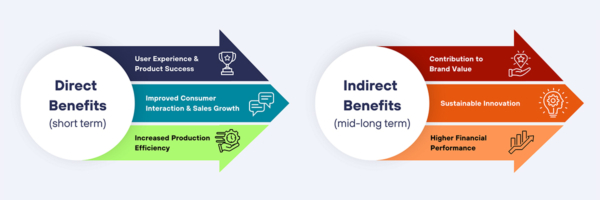
Direct Benefits
Direct benefits are the tangible effects of the design process on the product and its manufacturing.
Direct Impact on Product Development
- User Experience and Product Success:
Industrial design helps ensure that products are developed in line with user needs through ergonomics, usability and accessibility. A well-designed product is easier to understand and safer to use. This improves user satisfaction, strengthens confidence in the product and increases the likelihood of repeat preference. - Increasing Manufacturing Efficiency:
Industrial design, engineering and manufacturing are not independent processes. Making design decisions collaboratively from the beginning can lead to fewer parts, easier assembly, more efficient use of materials and improved maintenance processes. Product development can therefore contribute directly to manufacturing efficiency. - Consumer Perception and Sales Success:
Design centered on user experience helps a product be perceived as higher quality. A strong design language differentiates the product from competitors, supports premium positioning and positively influences purchasing decisions. In this way, new product design contributes directly to both marketing and sales performance.
Indirect Benefits
Companies that integrate innovation and industrial design into their processes gain benefits that extend beyond the product itself in the medium and long term. Their impact on brand value, corporate culture and competitiveness often emerges under this heading.
- Design’s Contribution to Brand Perception
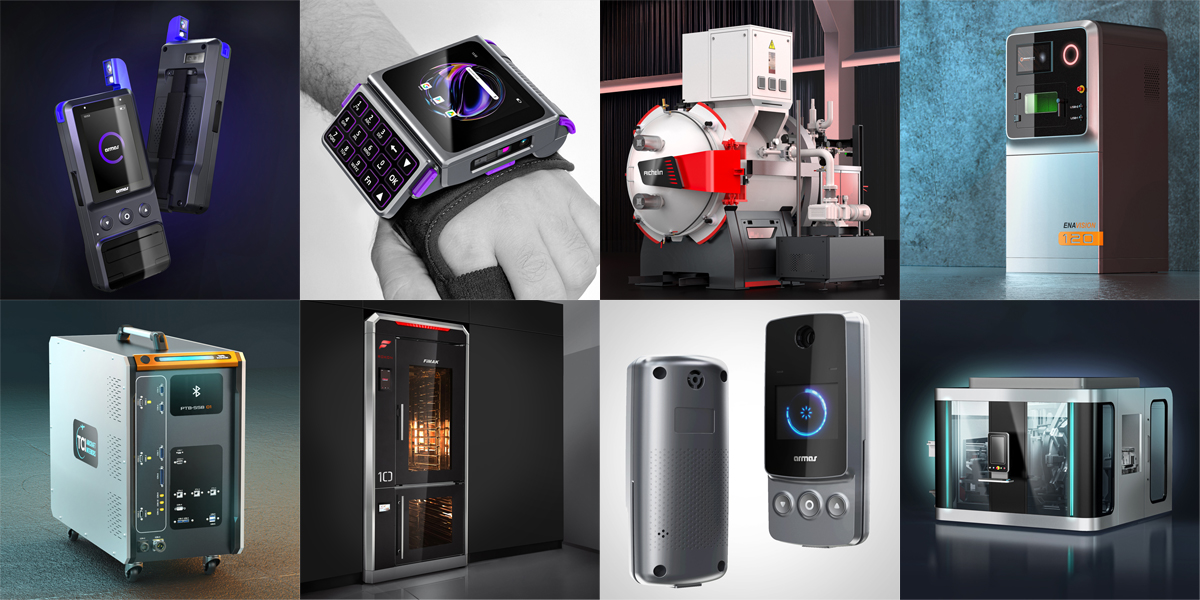
Industrial design strengthens brand perception by bringing aesthetics and functionality together within a coherent product identity. A consistent product language reinforces the relationship customers build with the brand and contributes to brand loyalty. A design-driven approach and international design achievements can also serve as powerful communication tools that enhance a company’s visibility and prestige.
- Culture and Continuity of Innovation
Including designers in the process as strategic stakeholders helps foster a culture of human-centered thinking within the organization. This approach supports the evaluation of innovative ideas across different disciplines and enables them to be transformed into products more efficiently.
Throughout a project, industrial designers remain in close communication with management, engineering, marketing and manufacturing teams. The shared success that emerges at the end of long product development processes strengthens employees’ engagement with both the project and the brand. As a result, the culture of innovation within the organization extends beyond a single project and becomes continuous.
- Economic Performance of Design-Driven Companies
Companies that place innovation and industrial design at the core of their approach can also achieve significant financial benefits.
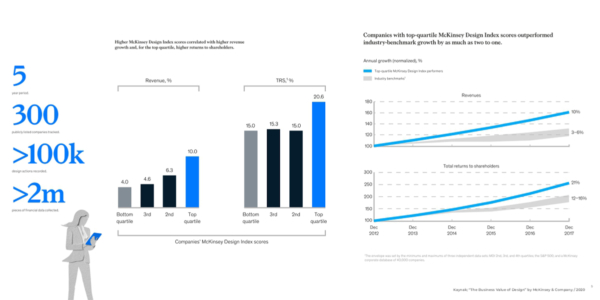
McKinsey conducted an extensive study to assess the impact of design on companies’ financial performance.
Scope of the study:
- More than 300 publicly listed companies were analyzed.
- More than 2 million pieces of financial data were examined.
- More than 100,000 design actions were evaluated.
- The study covered a broad range of sectors, from consumer products and medical devices to services and industrial equipment.
Key findings of the study:
- Companies that manage design well grow faster.
Companies with the strongest design practices achieved 32% higher revenue growth and 56% higher total returns to shareholders compared with their industry peers.
- Design is not simply about appearance.
Successful companies treat design not simply as product aesthetics, but as an integrated strategic tool encompassing customer experience, usability, services and business processes.
- The design process should be owned by senior management.
Stronger results emerge in companies where design decisions are not left solely to design teams, but are also embraced at senior management level.
- User focus supports success.
Successful companies maintain continuous contact with end users throughout the design process. Prototyping, testing and feedback loops are central to product development.
- Cross-disciplinary teams make a difference.
Successful design outcomes are not the work of designers alone; they result from collaboration among engineering, marketing, manufacturing and other areas of expertise.
The conclusion of the study:
Design is a strategic tool for creating value and driving growth.
Companies that place design at the center of their business model have the potential to achieve faster growth and more sustainable success.
Developing new products requires investment, time and a certain degree of risk. However, managing design and innovation effectively can generate strong returns on that investment over the medium and long term. The key is to treat design not as a temporary aesthetic intervention, but as a development tool embedded throughout the company.
Contribution to the National Economy
Innovation and design contribute not only to the growth of companies, but also to the development of the national economy.
The Twelfth Development Plan
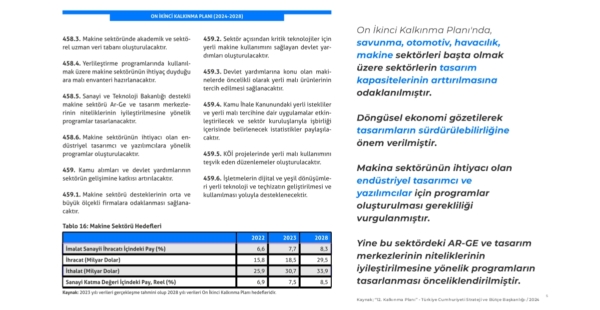
Türkiye’s Twelfth Development Plan sets out the objective of increasing design capacity across a range of sectors, particularly defense, automotive, aerospace and machinery. In line with the circular economy approach, the plan emphasizes sustainable design and highlights the need to develop programs for industrial designers and software professionals required by the machinery sector.
The development of programs aimed at improving the capabilities of R&D and design centers operating in these sectors is also identified among the priorities.
In conclusion, industrial design is a strategic force that directly influences company growth, efficiency, product quality and brand value. Companies that integrate design and innovation into their business processes differentiate themselves from competitors in both product development and competitiveness. Over the long term, the value created by a user-centered approach and cross-disciplinary collaboration strengthens brand perception, supports export capacity and develops an internal culture of innovation.
In short, industrial design is not a cost of transformation, but a strategic investment that accelerates sustainable growth and prepares companies for the markets of the future. Companies that adopt this approach do more than adapt to existing competition; they can also influence the direction of transformation within their industries.